
OCT Scan
OCT Scan
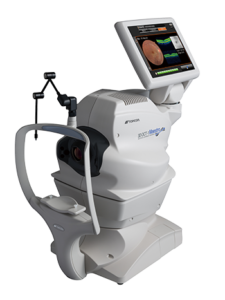 An OCT (Optical Coherence Tomography) scan is a painless, non-invasive eye scan that uses light waves to create detailed 3D images of the retina’s inner layers, much like an ultrasound uses sound. It allows opticians to see beneath the surface of the eye, detecting subtle changes in the retina, optic nerve, and macula that signal serious conditions like glaucoma, diabetic retinopathy, and macular degeneration years earlier than traditional methods, helping with early diagnosis and monitoring over time.
How it Works
- Uses Light Waves: Instead of sound, OCT uses infrared light to scan the back of the eye (retina).
- Creates Cross-Sections: It takes thousands of cross-sectional images per second, building a detailed 3D map of the retina’s distinct layers.
- Painless & Quick: You rest your chin on a support, focus on a target, and the scan takes just a few seconds.
- No Touch, No Pain: It’s completely non-invasive, with no physical contact with the eye.
What it Detects
- Glaucoma: Detects thinning of the optic nerve fiber layer.
- Diabetic Eye Disease (Retinopathy): Spots fluid or swelling in the retina.
- Macular Degeneration (AMD): Reveals changes in the macula.
- Vitreous Issues: Shows issues in the gel-like substance filling the eye.
Benefits
- Early Detection: Identifies problems before symptoms appear.
- Precise Monitoring: Scans are saved, allowing optometrists to track subtle changes over time.
- Hospital-Grade Technology: Provides high-resolution images often used in hospital settings.